
 Facebook
 X
X LinkedIn
 Forward
Omid Naim, MD in Psychiatry
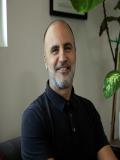
Dr. Omid Naim is a psychiatrist, educator, and social entrepreneur whose life’s work is to transform how we understand, deliver, and cultivate health in our society. A graduate of the University of Southern California School of Medicine, he completed his residency in General Psychiatry and fellowship in Child & Adolescent Psychiatry at the University of California, San Francisco. Early in his career he worked in community psychiatry with foster youth and other highly vulnerable populations, where he witnessed how trauma and disconnection were neglected as root causes of suffering. These experiences revealed the limitations of modern psychiatry’s focus on symptom management through psychoactive medications and led him to pursue training in Integrative Medicine at the University of Arizona, where he studied with Dr. Andrew Weil as a Bravewell Scholar.
Dr. Naim went on to establish Hope Integrative Psychiatry, a clinic pioneering a whole-person approach to recovery. There he developed the Ecological Health Model, a framework that views health as an emergent property of connection—linking atoms in to molecules, cells and body systems, individuals and communities, and ultimately humans and the natural world This model moves beyond pathology and symptom reduction toward whole-person transformation and recovery.
Building on this foundation, he founded La Maida Project, a nonprofit reimagining mental health by addressing its root causes: disconnection from self, community, purpose, and nature, as well as cultural narratives that pathologize suffering and undermine people’s agency and capacity for healing and growth through meaning and story. Through partnerships with schools, public health systems, and social service agencies, La Maida Project implements the Ecological Health Model in real-world settings, advancing systemic change especially for underserved communities.
Today, Dr. Naim’s work focuses on expanding this ecological paradigm as both a clinical and cultural movement. He writes, teaches, and collaborates with leaders across disciplines to restore meaning, belonging, and wholeness as foundations of health—seeking not just to improve mental health outcomes, but to renew how society itself understands what it means to be human.
Financial relationships
-
Type of financial relationship:There are no financial relationships to disclose.Date added:07/28/2026Date updated:07/28/2026